
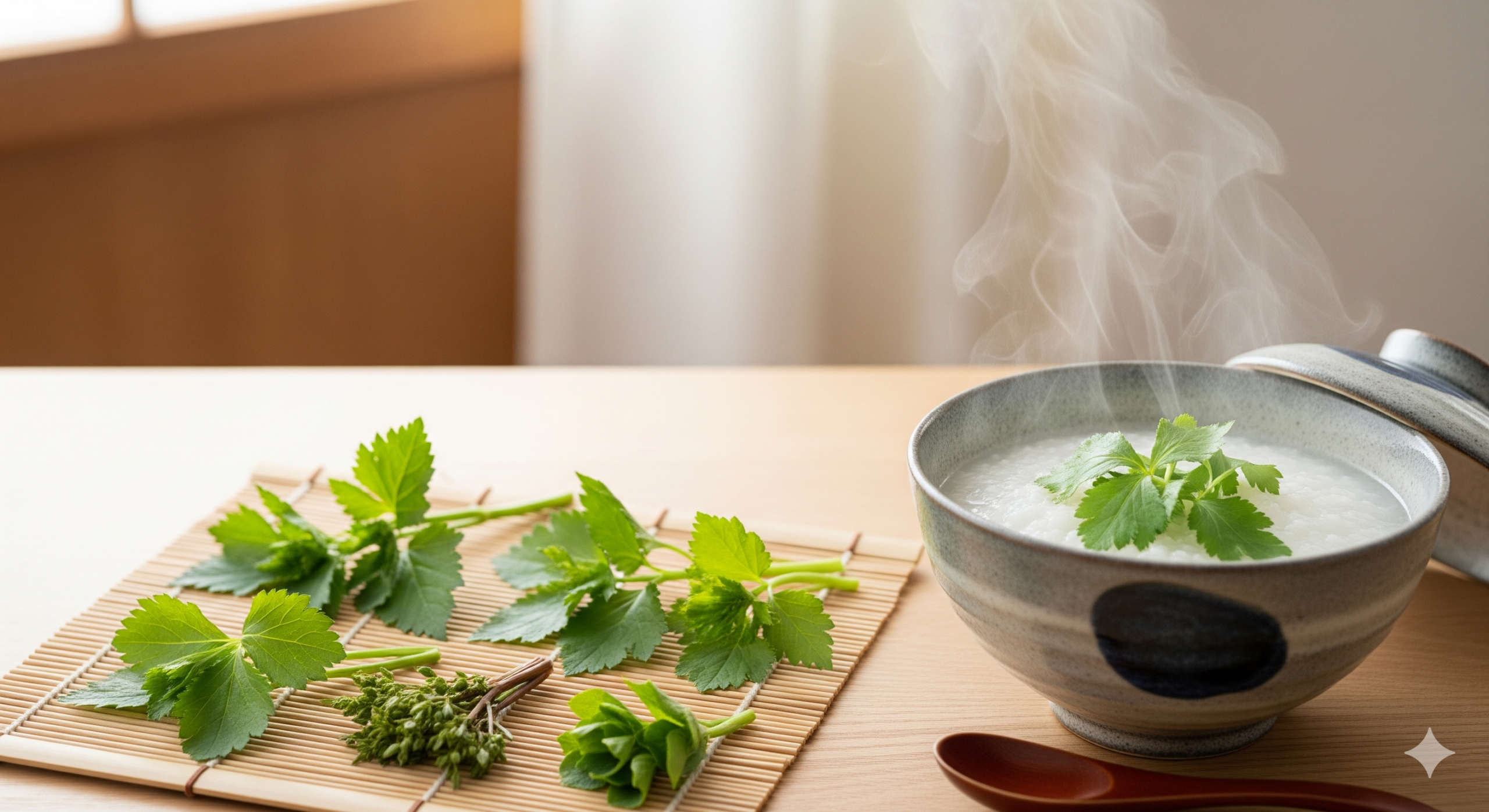
Japanese culture is deeply connected to nature and seasonal traditions. One beautiful example of this is the Seven Herbs of Spring, known in Japanese as Nanakusa no Sekku (七草の節句). This traditional custom is still practiced today and reflects Japan’s respect for health, balance, and the changing seasons.
What Are the Seven Herbs of Spring?
The Seven Herbs of Spring are a group of edible plants traditionally eaten on January 7th. On this day, Japanese people eat Nanakusa-gayu, a simple rice porridge made with these seven herbs.This custom dates back over 1,000 years to the Heian period and is one of Japan’s five seasonal festivals, called Gosekku.
The List of the Seven Herbs
Here are the traditional Seven Herbs of Spring, with their English names:
- Seri (Japanese parsley)
- Nazuna (Shepherd’s purse)
- Gogyō (Cudweed)
- Hakobera (Chickweed)
- Hotokenoza (Nipplewort)
- Suzuna (Turnip)
- Suzushiro (Daikon radish)
These herbs were easy to find in early spring and were valued for their nutritional benefits.
Why Do Japanese People Eat Nanakusa-gayu?
Eating Nanakusa-gayu has several cultural meanings:
- 🌿 To pray for good health throughout the year
- 🍚 To rest the stomach after heavy New Year meals
- 🌸 To welcome the new season and early spring growth
The dish is light, gentle, and easy to digest, which matches the Japanese idea of seasonal balance.
Cultural Significance in Modern Japan
Today, many Japanese families still eat Nanakusa-gayu on January 7th, even though modern lifestyles have changed. Supermarkets often sell ready-made seven herb sets, making it easy to continue this tradition.
This custom shows how Japanese culture values:
- Seasonal awareness
- Simple, healthy food
- Respect for ancient traditions
Conclusion
The Seven Herbs of Spring are more than just ingredients—they represent Japan’s philosophy of living in harmony with nature. Through a simple bowl of rice porridge, people connect with history, health, and the changing seasons.
Learning about traditions like Nanakusa no Sekku helps us better understand the heart of Japanese culture.


コメント