
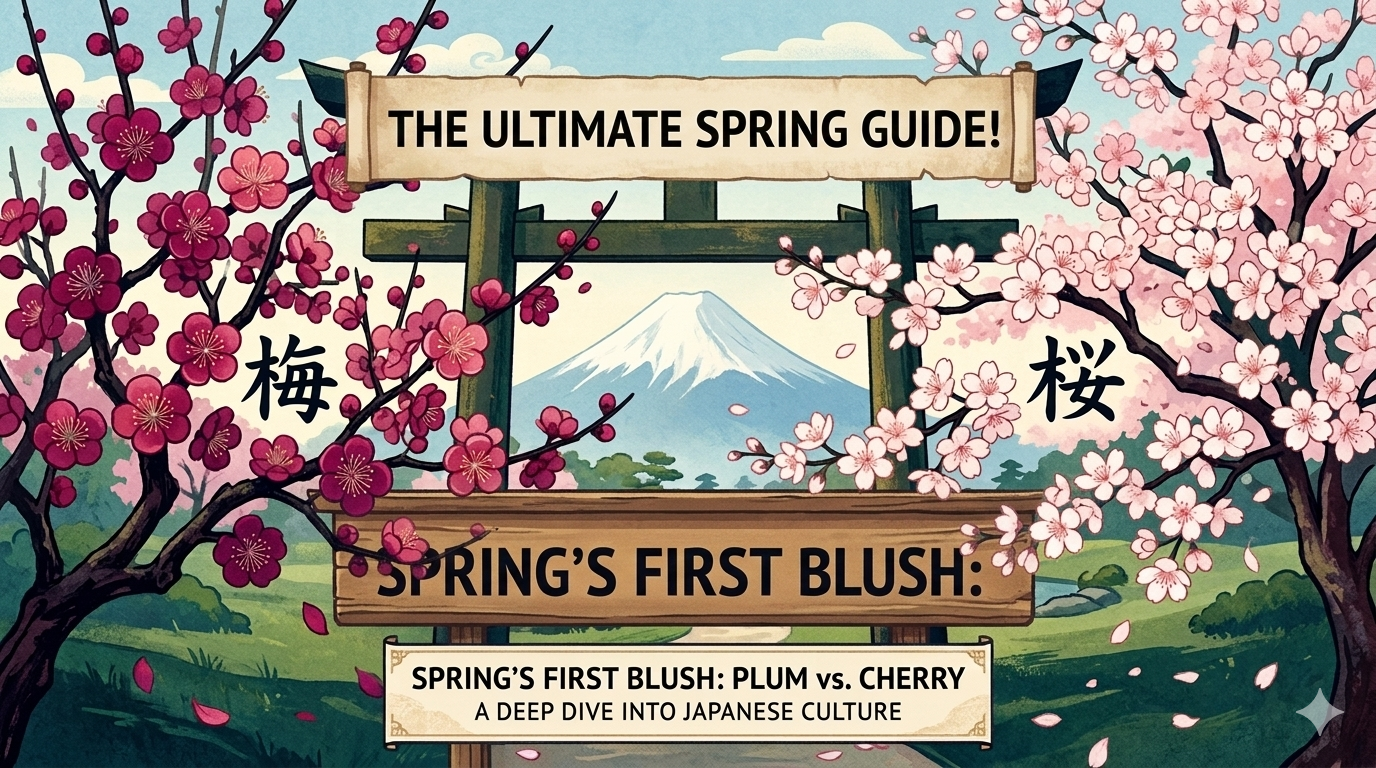
When the frost begins to thaw, Japan transforms into a landscape of delicate petals and sweet fragrances. While most international travelers flock to see the famous cherry tree, locals know that the season actually begins much earlier with the humble plum tree.
Both trees are cornerstones of Japanese culture, but they represent very different emotions and traditions. If you’re planning a garden or a trip to East Asia, understanding these two botanical icons is essential.
The Plum Tree (Ume): The Herald of Resilience
Before the cherry blossoms take center stage, the plum tree (known as Ume) braves the late winter cold. Blooming as early as February, the plum blossom is a symbol of resilience, health, and renewal.
Why the Plum Tree Matters
In Japanese culture, the plum tree was actually the original star of flower-viewing festivals (Hanami) during the Nara period. It wasn’t until later that the cherry tree took the top spot.
• Fragrance: Unlike cherry blossoms, which have a very faint scent, plum blossoms carry a deep, sweet, and spicy perfume.
• Appearance: You can identify a plum blossom by its rounded petals and the absence of a “split” at the tip.
• Symbolism: Because it blooms while snow is often still on the ground, it represents the strength to overcome adversity.
The Cherry Tree (Sakura): The Beauty of Impermanence
The cherry tree, or Sakura, is perhaps the most recognizable symbol of Japan. Its explosion of soft pink and white petals signals the true arrival of spring.
The Philosophy of Sakura
The obsession with the cherry tree in Japanese culture is rooted in the concept of Mono no aware—an awareness of the impermanence of things.
• The Short Bloom: Cherry blossoms only last for about a week or two. This fleeting beauty serves as a reminder to cherish the present moment.
• Cultural Celebrations: Modern Hanami parties are centered around the cherry tree, where friends and families gather under the branches for picnics.
• Visual Distinctions: Cherry blossoms have a small “V” notch at the end of each petal and grow on long stalks, creating a fluffy, cloud-like appearance on the branches.
Plum Tree vs. Cherry Tree: Quick Comparison
| Feature | Plum Tree (Ume) | Cherry Tree (Sakura) |
| Bloom Time | February – March | Late March – April |
| Petal Shape | Round | Oval with a “V” split |
| Scent | Strong and sweet | Very faint/None |
| Meaning | Resilience & Vitality | Impermanence & New Beginnings |
Bringing Japanese Culture to Your Backyard
Whether you choose a plum tree for its early fragrance or a cherry tree for its iconic spring show, both bring a piece of Japanese culture to your landscape. They remind us that nature has a rhythm—one that rewards patience in the winter and celebration in the spring.
コメント