
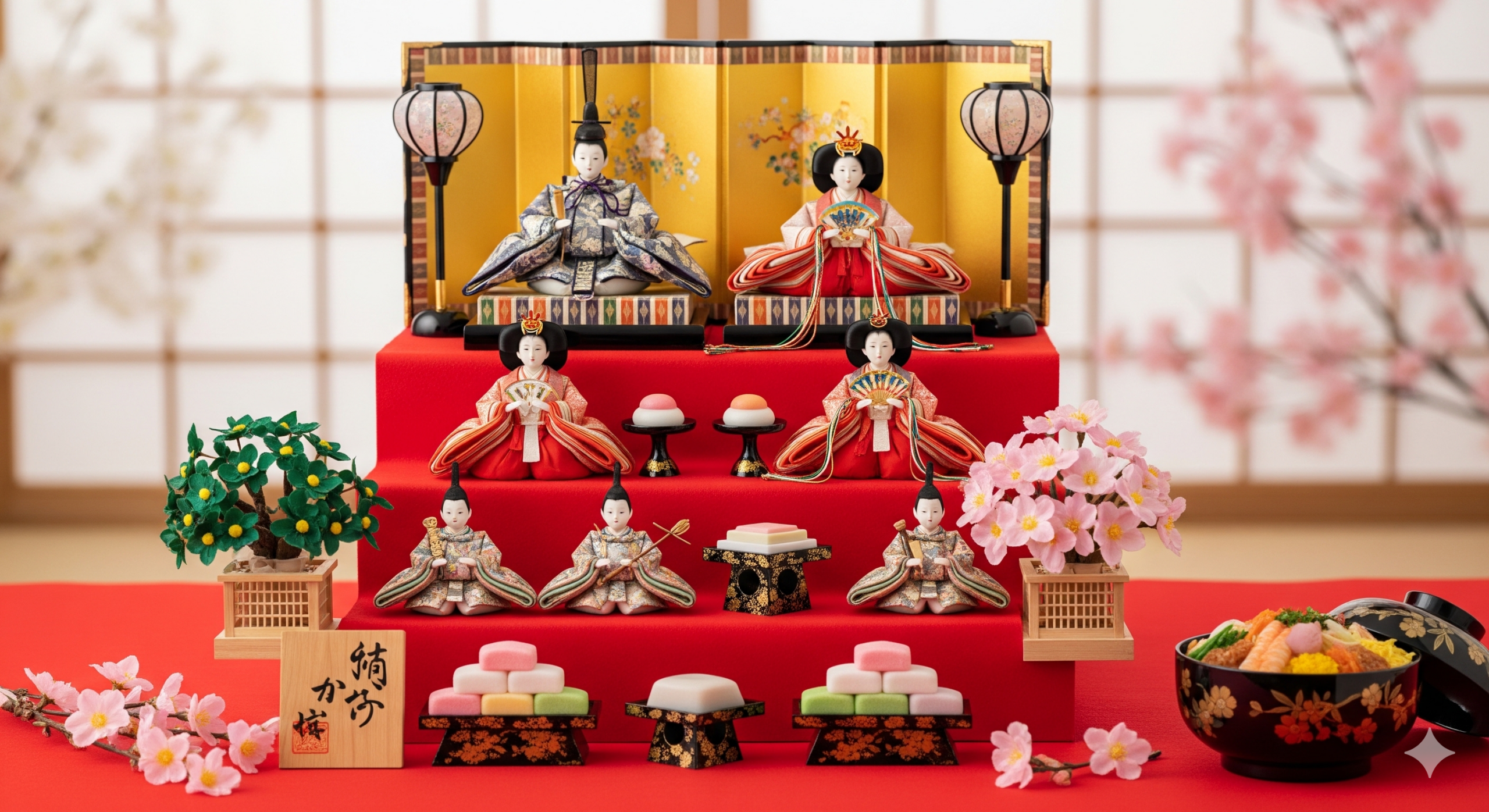
Every year on March 3rd, Japan transforms into a sea of pink blossoms and elegant silk dolls. This is Hinamatsuri, also known as the Doll Festival or the Peach Festival (Momo no Sekku).
While it is primarily a day to pray for the health, happiness, and prosperity of young girls, Hinamatsuri is a cultural celebration rich in history, exquisite craftsmanship, and delicious seasonal food. Whether you are in Japan or celebrating from afar, here is everything you need to know about this spring tradition.
The History Behind the Dolls
The origins of Hinamatsuri date back over a thousand years to the Heian Period. Historically, people practiced Nagashi-bina, a ritual where straw dolls were set afloat down rivers. It was believed these dolls would carry away bad luck and evil spirits, protecting the children they represented.
Over time, these simple straw figures evolved into the elaborate Hina-ningyo (Hina dolls) we see today. These dolls are usually displayed on a tiered platform covered with a red carpet, known as a dankazan.
The Hina Doll Display
The arrangement of the dolls is strictly traditional, representing a Heian-era imperial wedding:
- The Top Tier: The Emperor (Odairi-sama) and the Empress (Ohina-sama).
- The Second Tier: Three court ladies (Sannin-kanjo) serving sake.
- The Third Tier: Five court musicians (Gonin-bayashi).
Pro Tip: Tradition says the dolls must be put away immediately after March 3rd. According to superstition, leaving them out too long may result in a late marriage for the daughter of the house!
Traditional Foods of Hinamatsuri
No Japanese festival is complete without symbolic cuisine. Hinamatsuri dishes are chosen for their bright, spring-like colors—pink, white, and green—and their auspicious meanings.
- Chirashizushi (Scattered Sushi): This colorful dish is topped with shrimp for longevity and lotus root (renkon) to symbolize a clear view of the future.
- Hina-arare (Rice Crackers): These crunchy, multicolored treats represent the four seasons.
- Hishimochi (Diamond Rice Cakes): These layered cakes use pink to represent peach flowers, white for the melting snow, and green for new grass growth.
- Hamaguri Ushio-jiru (Clam Soup): Because two clam shells fit perfectly together, they symbolize the hope for a happy, harmonious marriage.
How to Celebrate Hinamatsuri Today
You don’t need an expensive seven-tier doll set to participate in the spirit of the day! Here are a few simple ways to celebrate:
- Decorate with Peach Blossoms: The peach tree symbolizes a noble spirit and is believed to drive away evil.
- Enjoy a Themed Meal: Try making your own Chirashizushi or picking up some Japanese sweets (wagashi) at a local market.
- Gift Giving: It is common for grandparents to gift a single doll or a small set to a newborn girl for her first Hinamatsuri (Hatsu-zekku).
Final Thoughts
Hinamatsuri is a beautiful reminder of the changing seasons and the deep love families hold for their children. It’s a time to appreciate craftsmanship, enjoy the company of loved ones, and welcome the arrival of spring.
Happy Hinamatsuri to all!
コメント