
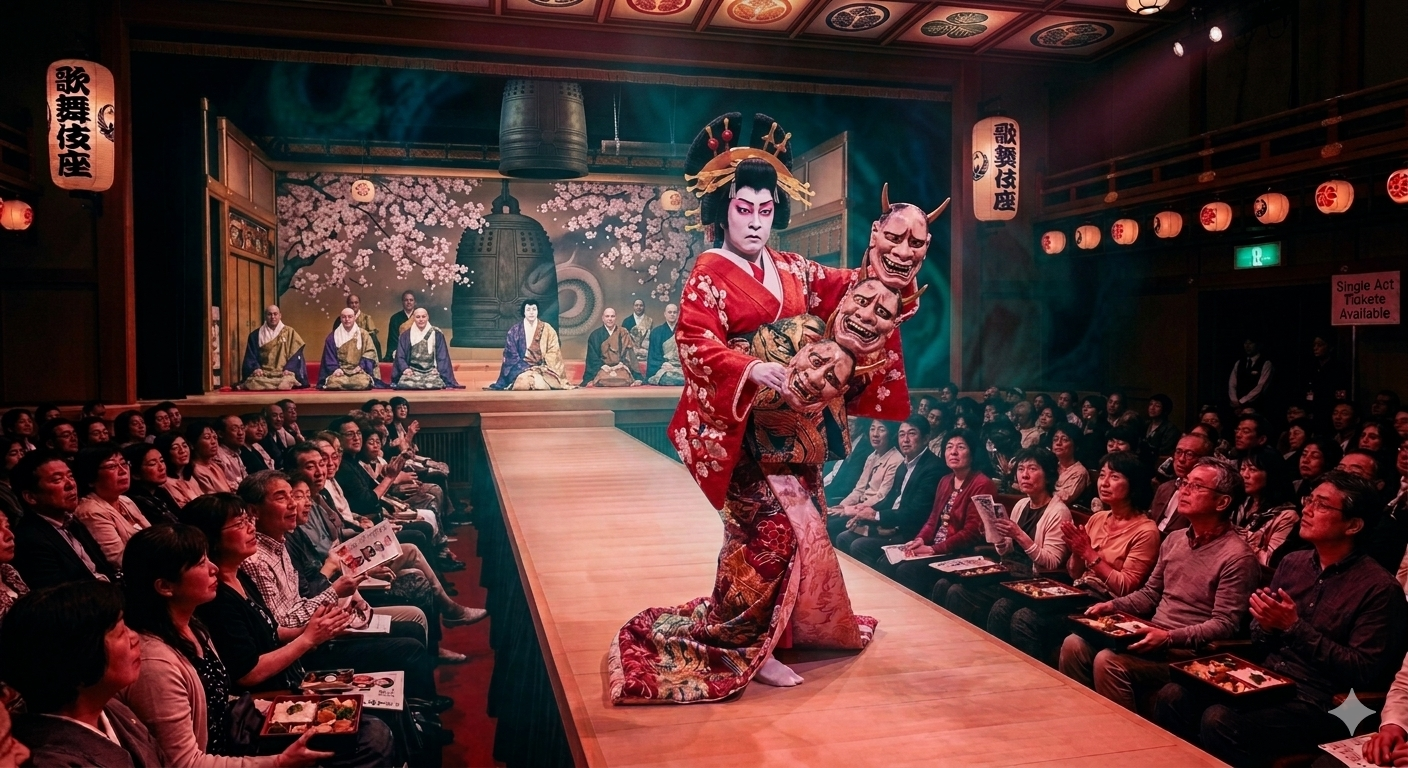
Kabuki is more than just a performance; it is a vivid, high-energy explosion of Japanese history, fashion, and soul. If you are planning a trip to Japan or simply want to understand the art form that inspired everything from modern anime to high-fashion runway shows, you’ve come to the right place.
In this guide, we’ll break down the essentials of Kabuki, from its “rebellious” origins to the best places to catch a show in 2026.
What is Kabuki? (The Meaning Behind the Name)
The word Kabuki is derived from three kanji characters:
• Ka (歌): Song
• Bu (舞): Dance
• Ki (伎): Skill
Interestingly, the word also comes from the verb kabuku, meaning “to lean” or “to be out of the ordinary.” In the 1600s, Kabuki was the “punk rock” of its time—bold, eccentric, and defiant of social norms.
3 Key Features to Look For
1. Onnagata (Male Actors in Female Roles): Since women were banned from the stage in 1629, male actors have specialized in portraying women. This year, rising stars like Nakamura Takanosuke are bringing fresh energy to these traditional roles.

2. Kumadori Makeup: This isn’t just face paint. The colors represent the character’s soul. Red signifies a hero or justice, while blue/indigo represents a villain or a ghost.

3. The Hanamichi (Flower Path): A long raised platform that runs through the audience. Actors use this for dramatic entrances, making you feel like part of the action.

Why 2026 is the Year to Watch Kabuki
Kabuki is currently experiencing a massive “youth revival.” Thanks to the 2025 blockbuster film Kokuho and successful “Anime-Kabuki” collaborations (like Touken Ranbu and Lupin III), more young people are filling the theaters than ever before.

Current 2026 Highlights:
• New Generations: Keep an eye on the Onoe family, specifically Onoe Kikugoro VIII, who took his legendary stage name in 2025.

• Beginner Programs: The Minamiza Theatre in Kyoto and the New National Theatre in Tokyo are running specialized “Discover Kabuki” sessions in 2026, complete with English explanations.
Where to Watch Kabuki in Japan
If you want the full experience, these three theaters are the “Big Three”:
| Theater | City | Vibe |
| Kabukiza Theatre | Tokyo | The “Mecca” of Kabuki. Luxury meets tradition. |
| Minamiza Theatre | Kyoto | The birthplace of Kabuki; incredibly historic and beautiful. |
| Osaka Shochikuza | Osaka | Known for its lively performances and warm atmosphere. |
Pro Tip: Don’t have 4 hours for a full play? Look for Hitomaku-mi (Single Act Tickets) at the Kabukiza. They are affordable (usually under 2,000 JPY) and perfect for a 60-minute “taster” session.
Quick Tips for Your First Show
• Rent a G-Audio Guide: Most major theaters offer English earphone guides that explain the plot and historical context in real-time.
• Bento is Encouraged: Unlike Western opera, it is a tradition to eat a “Makunouchi Bento” in your seat during intermissions.
• Dress Code: There is no strict dress code! While some locals wear beautiful Kimonos, casual clothing is perfectly acceptable for tourists.
Final Thoughts
Kabuki is a bridge between Japan’s samurai past and its high-tech future. Whether you’re drawn in by the incredible costumes or the powerful “Mie” poses (where an actor freezes in a powerful stance), it is an experience you won’t forget.

コメント