
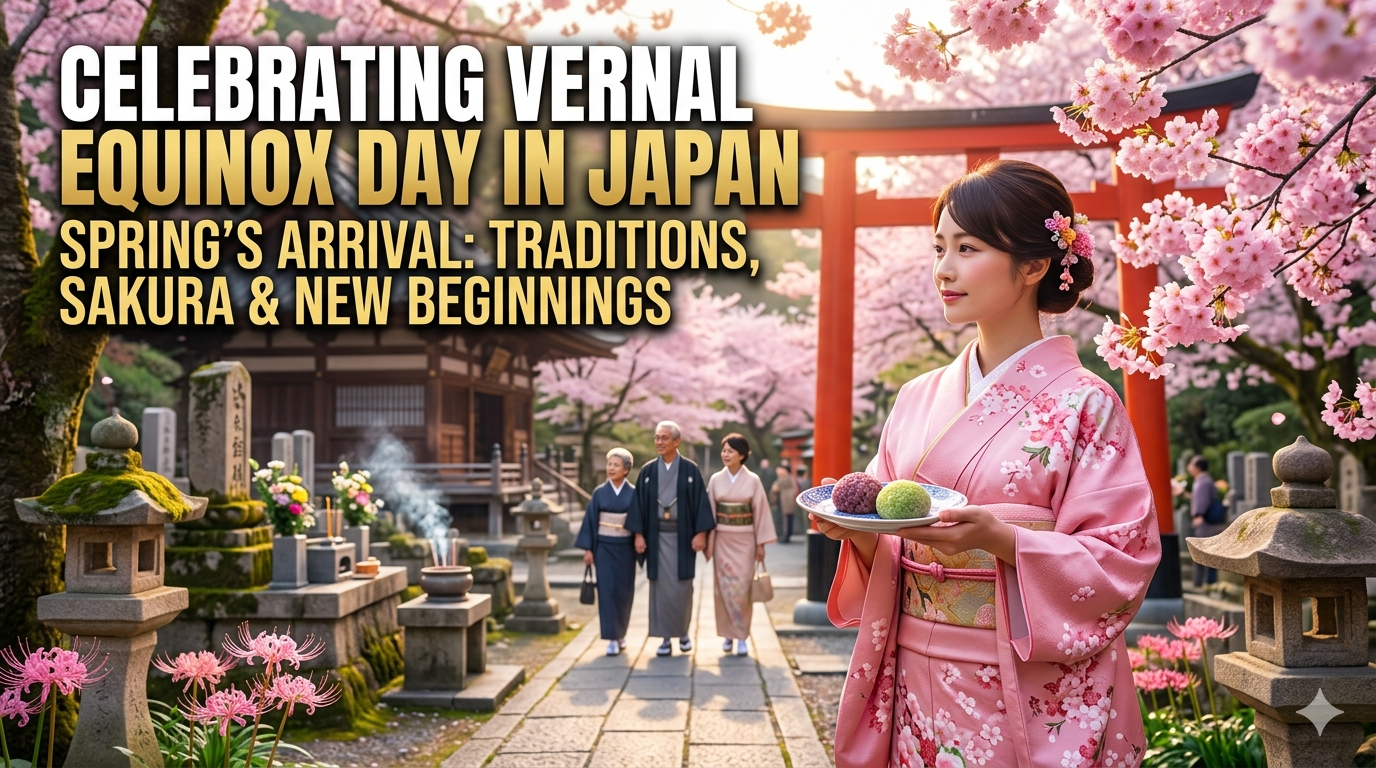
As the biting winds of winter finally give way to gentle breezes and the first hints of pink appear on cherry blossom branches, Japan prepares for a unique national holiday: Vernal Equinox Day (Shunbun no Hi).
While many cultures celebrate the start of spring, Japan’s approach is a beautiful blend of astronomical appreciation, ancestral respect, and a deep-rooted connection to the changing seasons. If you’re planning a trip or simply want to understand the cultural heart of Japan, here is everything you need to know about this special day.
What is Vernal Equinox Day?
In Japan, the Vernal Equinox isn’t just a calendar event; it’s a public holiday dedicated to “the admiration of nature and the love of living things.” Traditionally, it marks the moment when day and night are of equal length.
Historically, this period is part of a seven-day festival known as Ohigan. The word “Higan” literally translates to the “other shore,” referring to the spirit world. It is believed that during the equinox, the barrier between our world and the afterlife becomes thinner, making it the perfect time to honor those who have passed.
Key Traditions and Rituals
If you find yourself in Japan during late March, you’ll notice several distinct customs:
• Visiting Ancestral Graves: Families gather to clean tombstones, offer fresh flowers, and light incense. It’s a time of reflection and gratitude.
• Botamochi (Sweet Rice Balls): The quintessential snack for this holiday. These are chewy rice balls smothered in sweet red bean (azuki) paste. They are named after the Botan (peony), which blooms in spring.
• Temple Festivals: Many shrines and temples hold special ceremonies to pray for a bountiful harvest and good health for the coming year.
Why Visit Japan During the Vernal Equinox?
While the exact date varies slightly each year (usually falling on March 20th or 21st), it serves as the unofficial “starting gun” for the most famous season in Japan: Cherry Blossom Season.
| Feature | Why It’s Special |
| The Weather | Mild and pleasant—perfect for walking tours in Kyoto or Tokyo. |
| Plum Blossoms | Often in full bloom, offering a fragrant and less crowded alternative to Sakura. |
| Cultural Depth | A rare chance to see Japanese families engaging in centuries-old traditions. |
If you’re looking for the best spots to experience Vernal Equinox Day in Japan, keep these keywords in mind for your search:
1. Higanbana (equinox flowers)
2. Hanami (flower viewing)
3. Shunbun no Hi events
Quick Tip: Since it’s a national holiday, many locals will be traveling. Be sure to book your Shinkansen (bullet train) tickets and hotels well in advance!
Embracing New Beginnings
Vernal Equinox Day is more than just a day off work; it’s a reminder to pause and appreciate the renewal of life. Whether you’re enjoying a box of Botamochi or strolling through a quiet park in Osaka, the spirit of spring in Japan is truly infectious.
Conclusion: Embracing the Equilibrium of Spring
As the sun crosses the equator and the days begin to outstretch the nights, the Vernal Equinox serves as more than just a mark on the calendar; it is a profound bridge between the past and the future. In Japan, Shunbun no Hi reminds us that life is a delicate balance of honoring our roots through the traditions of Higan while simultaneously reaching toward the light of new beginnings.
Whether it is the quiet reflection at an ancestral grave or the joyful anticipation of the first cherry blossoms, this season invites us to harmonize with the natural world. By shedding the stillness of winter and embracing the vibrant energy of spring, we find the strength to begin anew. Let this equinox be a reminder to seek balance in your own life—to appreciate where you have come from, while stepping forward into the warmth of the coming season with a renewed sense of hope and vitality.

コメント