
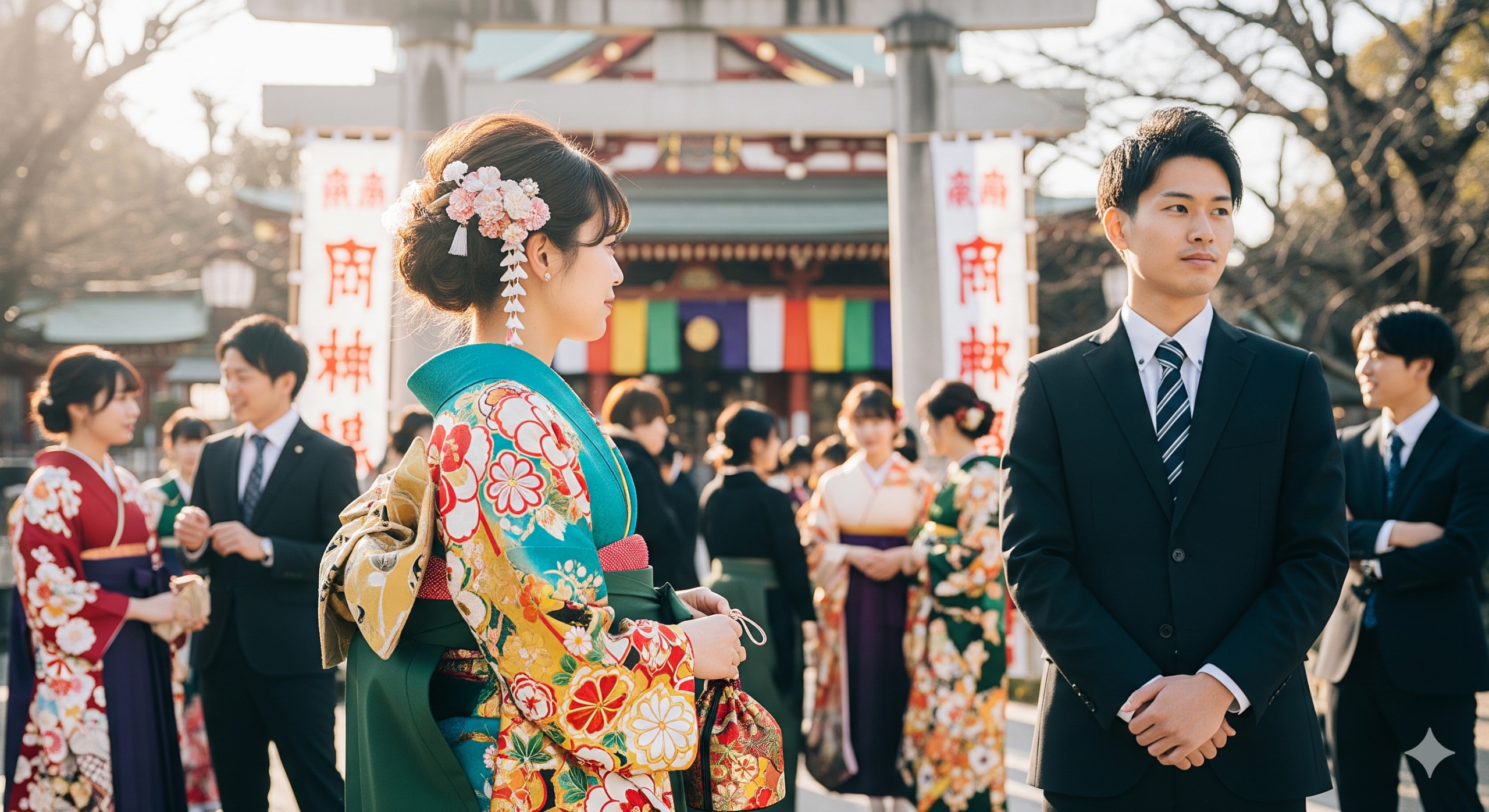
Japan’s Coming of Age Day ceremony, known as Seijin no Hi (成人の日), is a meaningful national event that celebrates young people as they officially become adults. This special day combines tradition, culture, and modern Japanese society, making it a fascinating topic for both visitors and those interested in Japanese customs.
In this article, we’ll explore the meaning of Coming of Age Day in Japan, its history, traditional attire, and how the ceremony is celebrated today.
What Is Coming of Age Day in Japan?
Coming of Age Day is a Japanese national holiday held on the second Monday of January every year. It celebrates people who have reached adulthood, traditionally at the age of 20.
Turning 20 has long been considered a major milestone in Japan. It marks the age when a person gains full legal rights, such as voting, signing contracts, and being recognized as a responsible member of society.
History of Seijin no Hi
The origins of Seijin no Hi date back to 1946, shortly after World War II. A local celebration held in Saitama Prefecture inspired the national government to establish Coming of Age Day as an official holiday in 1948.
The purpose was to encourage young people and give them hope for the future during a time of national recovery. Since then, the ceremony has become an important annual tradition across Japan.
The Coming of Age Ceremony (Seijin Shiki)
On Coming of Age Day, local governments host official ceremonies called Seijin Shiki (成人式) at city halls, community centers, or public venues.
What happens at the ceremony?
- Speeches by local officials and community leaders
- Encouraging messages about responsibility and independence
- Congratulations to new adults
- Group photos and commemorative events
Although the atmosphere is formal, it is also celebratory and emotional for many participants and their families.
Traditional Clothing: Kimono and Hakama
One of the most striking aspects of Coming of Age Day in Japan is the traditional clothing.
For women
Many women wear furisode, a long-sleeved kimono that symbolizes youth and elegance. These kimono are often brightly colored with intricate designs and are paired with formal hairstyles and accessories.
For men
Men may wear hakama with a traditional kimono, though many choose modern suits instead. Both styles reflect respect for the importance of the day.
Because of the high demand, kimono rentals and photo studios are often booked months or even years in advance.
Modern Changes to Coming of Age Day
In recent years, Japanese law lowered the legal adulthood age from 20 to 18. However, most local governments continue to hold Coming of Age Day ceremonies for those who are 20 years old.
This decision reflects cultural traditions, as 20 remains a symbolic age associated with maturity, celebration, and long-standing customs.
Why Coming of Age Day Is Important
Coming of Age Day is more than just a ceremony. It represents:
- A transition from youth to adulthood
- Recognition of social responsibility
- A moment of reflection on the future
- A connection between tradition and modern life
For many Japanese people, it is a once-in-a-lifetime event and a cherished memory.
Conclusion
The Coming of Age Day ceremony in Japan is a beautiful blend of tradition, community, and personal growth. Through Seijin no Hi, young adults are officially welcomed into society and encouraged to take responsibility for their future.
Whether you are studying Japanese culture, planning to visit Japan, or simply curious about global traditions, Coming of Age Day offers a deep insight into Japanese values and identity.


コメント