
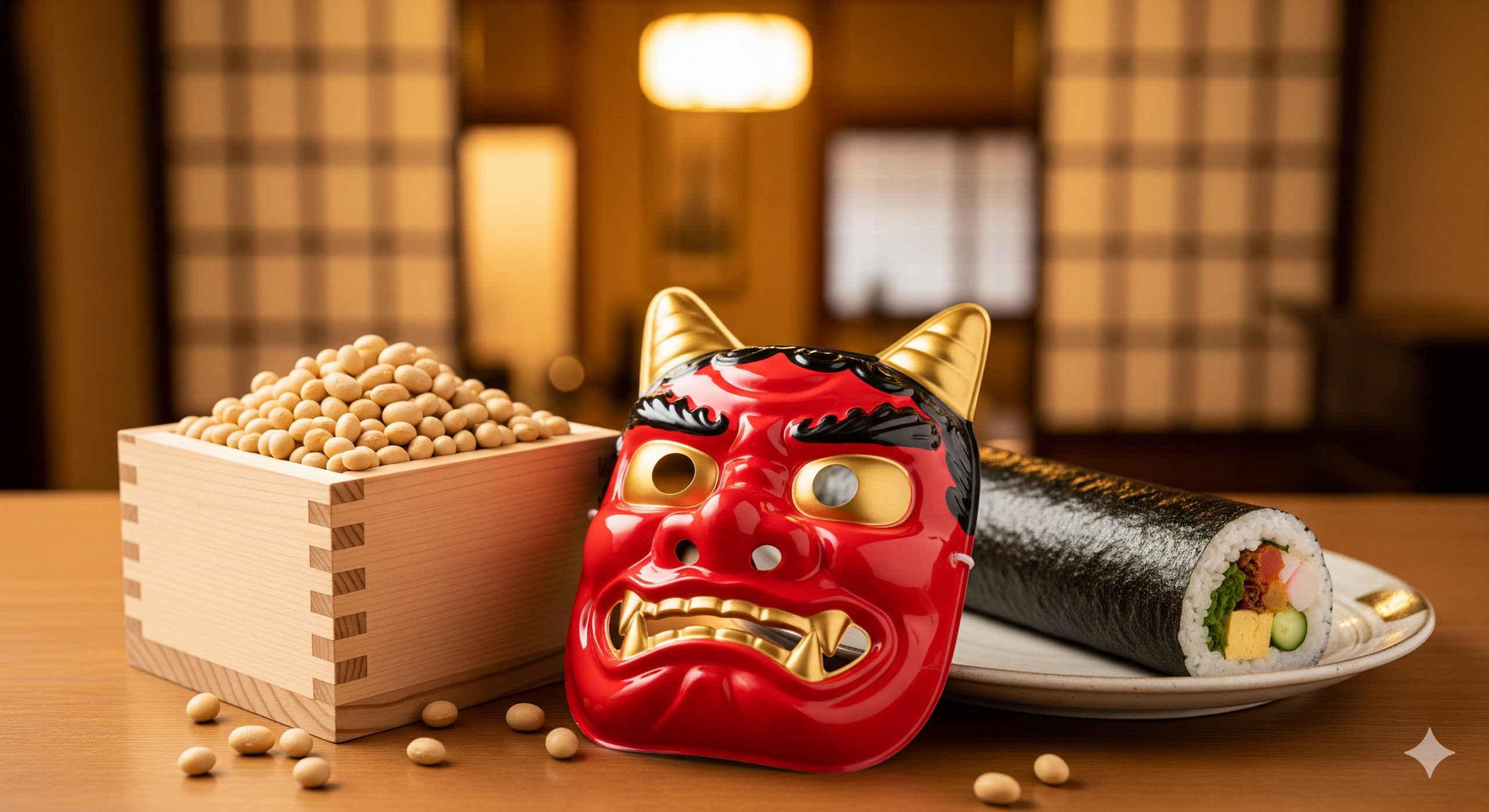
Day of Setsubun is a Japanese traditional event that marks the change of seasons, especially the transition from winter to spring. Setsubun is deeply rooted in Japanese culture and is still widely celebrated across Japan today. This article explains the meaning, history, and customs of Setsubun in an easy-to-understand way.
What Is Setsubun?
Setsubun (節分) literally means “seasonal division.” Traditionally, it referred to the day before the start of each new season, but in modern Japan, it usually refers to the day before Risshun, the beginning of spring in the traditional calendar. Setsubun is typically celebrated on February 3rd or February 4th, depending on the year.
The main purpose of Setsubun is to drive away evil spirits and bad luck and welcome good fortune for the new season.
Origin and History of Setsubun
The custom of Setsubun originated in ancient China and was introduced to Japan during the Heian period (794–1185). At that time, people believed that evil spirits appeared during seasonal changes and caused disasters, illness, and misfortune.
To protect themselves, people performed rituals to expel these spirits. Over time, these rituals evolved into the Setsubun traditions we know today.
Mamemaki: Bean-Throwing Ritual
The most famous Setsubun tradition is mamemaki (豆まき), or bean throwing.
During mamemaki, roasted soybeans are thrown either at someone wearing an oni (demon) mask or out the front door while saying:
“Oni wa soto! Fuku wa uchi!”
(Demons out! Good fortune in!)
This ritual symbolizes chasing away bad luck and inviting happiness into the home.
Eating Ehomaki for Good Luck
Another popular Setsubun custom is eating ehomaki, a thick sushi roll filled with various ingredients.
On Setsubun night, people:
- Eat ehomaki silently
- Face the lucky direction of the year (determined by the zodiac)
- Make a wish while eating the whole roll without cutting it
Ehomaki is believed to bring good luck, health, and prosperity for the year ahead.
Setsubun at Temples and Shrines
Many temples and shrines across Japan hold special Setsubun events. Famous temples often invite celebrities or sumo wrestlers to throw beans to large crowds. These events attract thousands of visitors and are broadcast on TV every year.
People also pray for:
- Good health
- Family safety
- Business success
Why Setsubun Is Still Important Today
Even in modern Japan, Setsubun remains an important cultural event. Families celebrate at home, schools teach children about its meaning, and communities gather at temples and shrines.
Setsubun reminds people to:
- Reflect on the past season
- Cleanse negative energy
- Start fresh with a positive mindset
Conclusion
Day of Setsubun Japanese traditional is more than just a festival—it is a meaningful ritual that connects people to Japan’s history and seasonal rhythms. Through bean throwing, eating ehomaki, and visiting temples, Japanese people welcome spring with hope, happiness, and good fortune.
If you are interested in Japanese culture, Setsubun is a wonderful tradition that shows how ancient beliefs still shape daily life in Japan today.
コメント